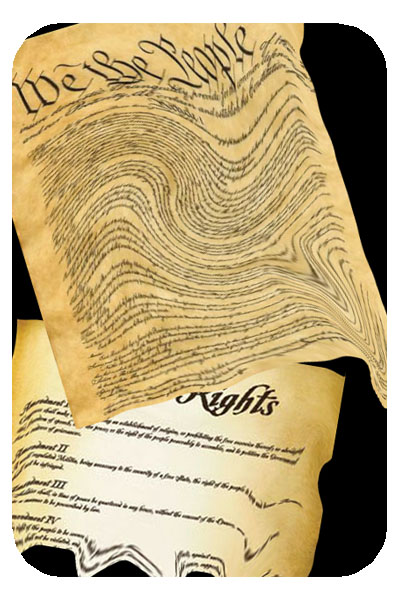
There is no way to understand the Constitution or the intent behind it without a knowledge of the history of the world at the time it was written. For that matter, you would need an understanding of history for at least a couple of thousands of years prior to the mid-1750s.
Our Founding Fathers had that knowledge. Though they did not have an education in a manner we see today, they were quite learned. They did not sit in a traditional classroom for 12 years and then move onto a 4-year college. Their early education was often provided by a nanny or their mother, the Bible often being a primary source. By the time they were seven or eight, a tutor might be hired, or the students would be sent to a local school paid for by the parents. A committee of parents hired a teacher, who received a salary and a place to live. The committee of each school determined the curriculum, which included a grounding of Latin, Greek, perhaps French, grammar, Roman and Greek history (read in Latin and Greek), astronomy, geometry, mathematics and music.
Two subjects were central to the required education that get very little focus today: logic (syllogism) was a requirement, teaching students how to reason from the general to the specific to reach a deduction (a course sorely lacking today). Rhetoric was also considered essential, using the teachings of Aristotle on the principals of persuasion, learning how to read a book, how to take the essential information from a book, as well as learning how to use figures of speech effectively.
By the age of 13, the students were sent to a preparatory school, designed to prepare them for college. Entrance to college required the ability to fluently speak Latin, as many courses were taught in Latin, and read and discuss the classical Latin writers. Knowledge of Greek was as important and the students had to demonstrate their capacity to parse the parts of Greek sentences, which ensured their understanding of the Greek language. Some colleges required the ability to translate parts of the Bible from Greek to Latin.
The path to advancement in the Colonies took many routes and was not reserved for the wealthy. Alexander Hamilton was born in the British West Indies and forced into the work force at the age of 11 when his father abandoned the family. As a clerk in a countinghouse, his hard work and intellect led him to the position of manager by the age of 17. His mother’s relatives sent him to a preparatory school in New Jersey and the following year he entered King’s College (now Columbia University).
The Christian faith was central to 106 of the first 108 colleges and universities in the Colonies and, later, the United States. Founded in 1636, Harvard College was designed to further education and teach the principles of Christianity. The Collegiate School (now Yale) was founded in 1701 as a stalwart wall against the growing liberalism of Harvard College. Prayer and services were a required daily part of the college student’s day throughout their college career.
The world they grew up in, in fact the very history of the world down through the centuries, was one of tyranny. One or a few declared themselves the rulers and made all the laws everyone else was forced to live under. Those laws could change on a whim, and since the power-that-be controlled the weapons of war, there was little the masses could do to better their lives. These rulers claimed to be the chosen of God or a god themselves, further intimidating the masses into compliance. After all, who would dare go against the wishes of the gods.
This shaped the mindset of the Founding Fathers, a mindset that is difficult for those in the western world to comprehend today. Those living in the New World did have something not seen in the rest of the world at that time… freedom to live their lives.
The sheer distance between Great Britain and the colonies required months of travel by ship. The North American continent was massive and could not be easily controlled once the cities were left behind. It had been 150 years since the first settlers arrived, 150 years in which freedom became more than just a concept to dream of, but a reality being lived. It became a mindset passed down from one generation to the next.
Let’s face it. After one has tasted freedom, why would anyone want to go back to tyranny? We see this playing out today in Hong Kong. After 99 years of being a British colony, Hong Kong was returned to China with the stipulation Hong Kong could continue its current government for 50 years. China is now reneging on that promise… and the people of Hong Kong are fighting back.
After the Revolutionary War ended, the Founders had to create a new government to carry the new nation into the future. At that point, they had a weak, so-called national government that was very ineffective for all intents and purposes. During the war, it was all but impossible to meet the needs of the soldiers… inadequate clothing, food, weapons, and it was only through the grace of God they defeated the British.
The 13 separate colonies viewed themselves as individual nations… nation-states, and they were not about to relinquish any of their new found freedom to another power. They recognized the need for some type of federal government for the defense of all or it wouldn’t be long before one of the world’s empires of the time moved in and took over.
So, how do you create a government to deal with the defenses of the country and the heads of other nations without losing your own freedoms? It was a delicate line to walk and they debated long and hard on just how to accomplish that.
The biggest hurdle they faced started with a phrase Thomas Jefferson wrote in the Declaration of Independence: “… all men are created equal…”. Many of the Founders recognized the irony of that claim while half of the country owned slaves. It was a radical thought. Every culture around the world viewed slavery as acceptable and had done so for thousands of years. Even some of the Founders who owned slaves realized it must end, but how do you do that when much of the country refused to do away with slavery? How do you create a new government with such diverging opinions of the very essence of what they had fought for? How do you stand united against the empires of the world that threaten your very existence?
God-given freedom. Freedom to make one’s own life choices. Freedom to choose those responsible for running our national defense and our state needs and to do so on a regular basis. Freedom to boot out those who violate our trust. And how to expand that freedom to those being kept enslaved by the Democrats of the South intent on maintaining their own little kingdoms.
The resulting document walked a very fine line, making every effort to restrict the powers of the federal government and leaving everything else in the hands of the States and the people that lived within them. The only legitimate method to make changes to the Constitution is through the route of amendments. Article 5 of the Constitution states:
“The Congress, whenever two thirds of both houses shall deem it necessary, shall propose amendments to this Constitution, or, on the application of the legislatures of two thirds of the several states, shall call a convention for proposing amendments, which, in either case, shall be valid to all intents and purposes, as part of this Constitution, when ratified by the legislatures of three fourths of the several states, or by conventions in three fourths thereof, as the one or the other mode of ratification may be proposed by the Congress; provided that no amendment which may be made prior to the year one thousand eight hundred and eight shall in any manner affect the first and fourth clauses in the ninth section of the first article; and that no state, without its consent, shall be deprived of its equal suffrage in the Senate.“
The Founders went to great lengths, through their speeches and their writings, to warn the citizenry how easily those freedoms could be lost. They spoke of the necessity of a well-rounded education, including the Bible, for only a moral and educated public could protect the Constitution.
The Founders explained there would always be people who would make every effort to undermine or go around the Constitution for their own political powers and wealth and it was up to each and everyone of us to block those who would do ill. When asked what type of government had been created, Benjamin Franklin replied, “a republic, if you can keep it”.
As each State joined the Union, it was required to write a similar Constitution for the State to ensure the freedoms enshrouded in the original Constitution would stand strong within the States themselves. No State was admitted until the State Constitution satisfied the federal government.
The history of our country is littered with such people, such as Aaron Burr in the early 1800s, who had designs on creating their own kingdoms. The knowledge of all that had happened to reach that point of freedom was still fresh in the minds of the citizens and it was not difficult to stop him. However, as the decades passed and the freshness of that knowledge dissipated in the general public, the fight to protect the Constitution has become ever more difficult.
This was recognized in 1866 in the U.S. Supreme Court case Ex Parte Milligan, 71 U.S. 2 (4 Wall.) (1866), in which they acknowledged there are those who would attempt to circumvent the Constitution. Lambdin P. Milligan had been arrested on October 5, 1864 on the order of General Alvin P. Hovey, commanding the military district of Indiana. Milligan had lived in Indiana for 20 years, never served in the Army or Navy and never took part in the Civil War. He was tried before a military commission, found guilty and sentenced to hang.
The Circuit Court of the U.S. in Indianapolis empaneled a grand jury. The grand jury found no evidence against Milligan and did not indict him. The petition presented to the Circuit Court was whether or not the military had the right to arrest and try Milligan by a military commission or if he should have been turned over to the local civilian authorities. At the time, the Circuit Court only had two judges and they disagreed on three major points. Since it was an evenly split decision, the case moved onto the Supreme Court.
The Supreme Court wrote in part:
“Time has proven the discernment of our ancestors, for even these provisions, expressed in such plain English words that it would seem the ingenuity of man could not evade them, are now, after the lapse of more than seventy years, sought to be avoided. Those great and good men foresaw that troublous times would arise when rulers and people would become restive under restraint, and seek by sharp and decisive measures to accomplish ends deemed just and proper, and that the principles of constitutional liberty would be in peril unless established by irrepealable law. The history of the world had taught them that what was done in the past might be attempted in the future. The Constitution of the United States is a law for rulers and people, equally in war and in peace, and covers with the shield of its protection all classes of men, at all times {121} and under all circumstances. No doctrine involving more pernicious consequences was ever invented by the wit of man than that any of its provisions can be suspended during any of the great exigencies of government. Such a doctrine leads directly to anarchy or despotism, but the theory of necessity on which it is based is false, for the government, within the Constitution, has all the powers granted to it which are necessary to preserve its existence, as has been happily proved by the result of the great effort to throw off its just authority.
In other words, our Founding Fathers were quite wise, and even though they made every effort to clearly define the roles of the three branches of government: the executive, the legislative and the judicial, there were those who would find ways to circumvent those roles… just 78 years after the Constitution was ratified.
The Supreme Court explained the Founding Fathers knew there would be periods of trouble and those in charge would dislike the restraints the Constitution places on them. Those leaders would feel justified to take any measure they felt was necessary to achieve the goals they decided were proper. To that end, the Founders understood liberty could only be secured by laws that could not be repealed, at least not without the approval of the United States citizens, and that could only be accomplished by going through the full process of ratifying a new amendment… a long and arduous process.
The Supreme Court went on to say the Constitution applies equally to those who are in charge and the citizens of the country at all times and under all circumstances. If the Founders had created a rule of law in which any or all parts of it could be suspended at the declaration of an emergency by the government, the consequences would be anarchy or despotism. Any event or supposition of an event that would justify suspending part of the Constitution is absolutely false. The Constitution gives the federal government only the powers it needs to protect itself and the fact that some go to great lengths to overthrow the Constitution proves the government does not need any more powers.
The 9th Amendment states:
The enumeration in the Constitution, of certain rights, shall not be construed to deny or disparage others retained by the people.
In other words, our rights are not limited to what is listed in the Constitution and Bill of Rights and those unlisted rights remain ours. The 10th Amendment expands on this:
The powers not delegated to the United States by the Constitution, nor prohibited by it to the states, are reserved to the states respectively, or to the people.
The 9th and 10th Amendments make it clear the Founders determined the Federal government would have express and limited powers (listed out in the Constitution), and any power not in the list would remain with the people and the States.
The Founders were quite clear. The Constitution applies to everyone equally and the Constitution limits exactly what powers the Federal government controls. All other powers belong to the States and the people.
So why is it that the Constitution seems to be fading away, to be worth no more than the paper it is written on? It all ties back to those famous words uttered by Benjamin Franklin: “a republic, if you can keep it”.
We the people have failed horribly. We handed the education of our children over to the State governments and in 1979, the Federal government took control, though the Constitution does not permit it. History of our country and civics are barely being taught, let alone world history. Logic and rhetoric have completely disappeared and classical literature isn’t even on the radar.
We allowed God and the Bible to be chased out of our schools and public square, and immorality takes the place of honor. What was the very foundation of the creation of our country has become ancient history in the eyes of the young and not to be taken seriously. Not surprising. If we don’t take it seriously, why should they?
What does it say about a country when even law school students are not required to study the Constitution before graduation? I would be willing to bet law students are not even aware their States have Constitutions.
No, the Constitution is not flexible. One cannot take a small section to justify taking actions that violate the rest of the Constitution. One cannot ignore parts that block the actions desired. The only time the Constitution can be changed is through an amendment that requires the approval of 2/3rds of the House and Senate and 3/4ths of the States.
Only the American people can determine how the U.S. moves forward. Do we hold the politicians and big businesses to account? Do we elect only those who will uphold the Constitution and boot out those who break their promises and oath to the Constitution? Do we educate ourselves and children on the Constitution and read the writings of the Founders so we can understand their intent?
Just what do you want and are you willing to fight for the future with the gifts we were given by our Founding Fathers in the past? Or will you allow it to slip away quietly in the night, completely unnoticed…
 Protecting the Constitution
Leave a comment